
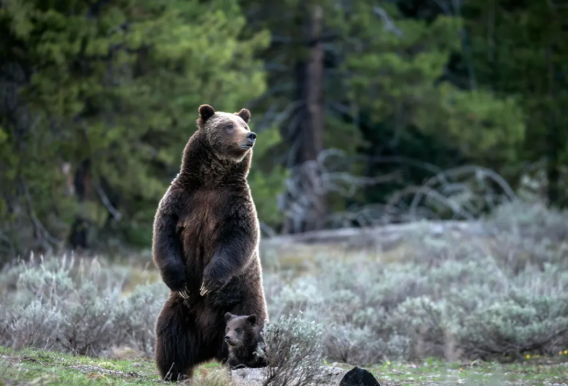
Bears are among the most easily recognizable large mammals in nature. They possess strong limbs, a robust body, and a keen sense of smell, and are distributed across Asia, Europe, and the Americas.
However, when people discuss the Most Famous Bears, they don’t necessarily think of wild animals; they might also think of literary characters like Winnie the Pooh or Paddington Bear. While these characters are anthropomorphized, they have interesting connections to real bears.
1. Giant Panda: A Famous Bear from China

The Giant Panda is one of the world’s most recognizable bear species, primarily inhabiting the mountainous forests of Sichuan, Shaanxi, and Gansu provinces in China.
The Giant Panda’s most distinctive features are its black and white fur, as well as its rounded head and body. Although belonging to the order Carnivora, their diet mainly consists of bamboo, requiring them to spend a significant amount of time eating each day.
The Giant Panda is also an important symbol of wildlife conservation. Through long-term habitat protection, ecological restoration, and population management, the conservation status of wild giant pandas in China has improved.
2. Polar Bear: The Apex Predator of the Arctic
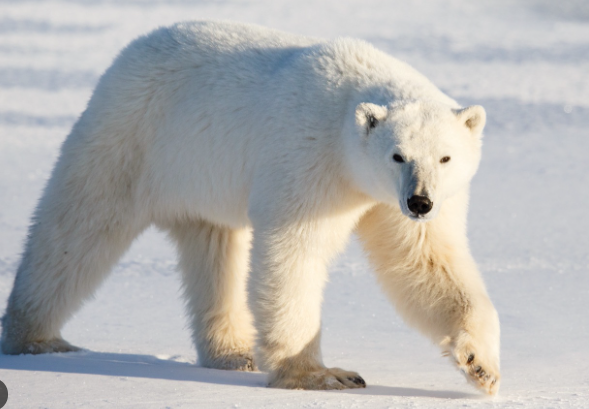
Polar bears are mainly distributed around the Arctic Circle and are one of the largest living terrestrial carnivores.
Polar bears possess a thick layer of fat, dense fur, and large paws, enabling them to adapt to cold environments and travel long distances on sea ice.
They primarily prey on seals, relying heavily on sea ice as hunting platforms.
With the reduction of Arctic sea ice, polar bears face problems such as habitat change and food shortages in some areas. Therefore, polar bears have become an important representative in the discussion of climate change and wildlife conservation.
3. Spectacled Bear: The South American Bear Behind Paddington Bear
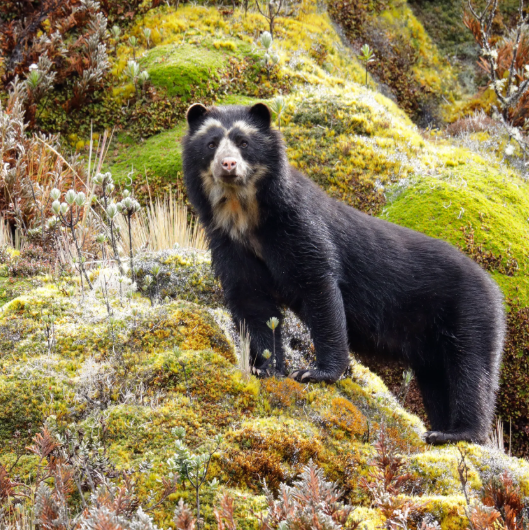
The Spectacled Bear, also known as the Andean Bear, is the only extant bear species in South America, distributed in the Andes Mountains and surrounding forests.
The spectacled bear gets its name from the light-colored fur around the eyes of some individuals, which sometimes resembles a pair of spectacles. However, not every spectacled bear has complete eye rings.
They are adept climbers, and their diet includes fruits, plant shoots, bromeliads, and small amounts of animal matter.
Spectacled bears also have a cultural connection to the famous literary character Paddington Bear. Paddington is depicted as a bear cub from Peru, a background reminiscent of spectacled bears living in South America.
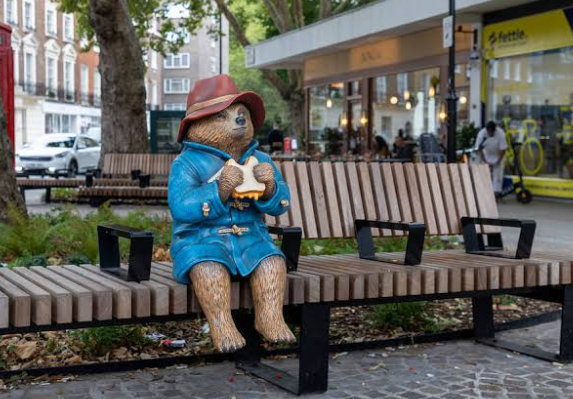
As the character has entered the realms of books, films, and public art, this connection has also drawn more attention to real South American bears. For example, the Paddington Bear Sculpture demonstrates how this literary character, through sculpture, retains the basic bear shape and incorporates iconic elements such as hats, coats, and sandwiches to create a recognizable artistic image.
However, real spectacled bears differ significantly from the fictional Paddington. They do not wear clothes and primarily rely on food from their natural habitat for survival.
4. Winnie the Pooh: A Classic Character Inspired by a Real Black Bear
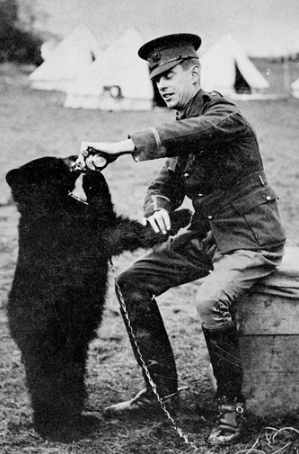
Winnie the Pooh is another world-renowned fictional bear, named after a real American black bear.
In 1914, Canadian army surgeon Harry Colebourn adopted a black bear cub and named it Winnipeg, nicknamed Winnie.
This bear was later kept at the London Zoo, where it became beloved by many visitors, including Christopher Robin, son of author A. A. Milne.
Christopher Robin named his toy bear Winnie, which later became a major source of inspiration for his father’s creation of *Winnie-the-Pooh*.
The publication of the eponymous storybook in 1926 solidified Winnie the Pooh as a classic children’s literature character.
Unlike the real American black bear, the literary Winnie loves honey, can communicate with other animals, and possesses distinctly human characteristics. This anthropomorphism has made the bear an important symbol of friendship and childhood memories.
5. Why have bears become classic figures in the animal kingdom and popular culture?
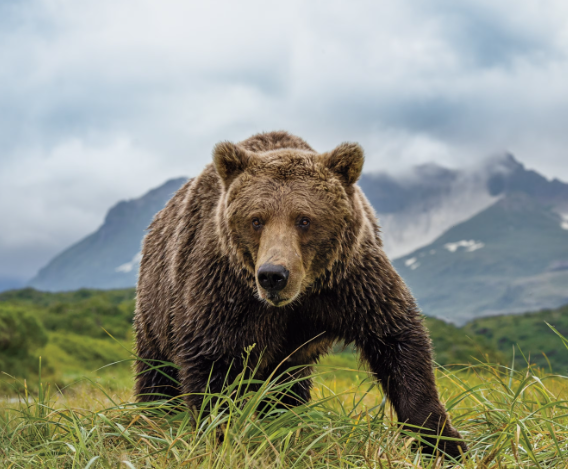
Real bears possess complex lifestyles. Different species exhibit significant differences in size, habitat, and diet.
Polar bears hunt on sea ice, giant pandas primarily eat bamboo, spectacled bears are adapted to mountain forests, and American black bears can inhabit a variety of forest environments.
In literature and animation, creators typically retain easily recognizable features such as round ears, broad heads, and thick bodies, then endow them with language, clothing, and personalities.
These cultural images can spark interest in bears, but understanding real animals still requires understanding their natural behaviors, ecological needs, and the threats they face.
Whether it’s wild giant pandas, polar bears, and spectacled bears, or classic literary characters, bears have become familiar animal figures in different ways. Understanding the real stories behind them also helps to further recognize the importance of wildlife conservation.