
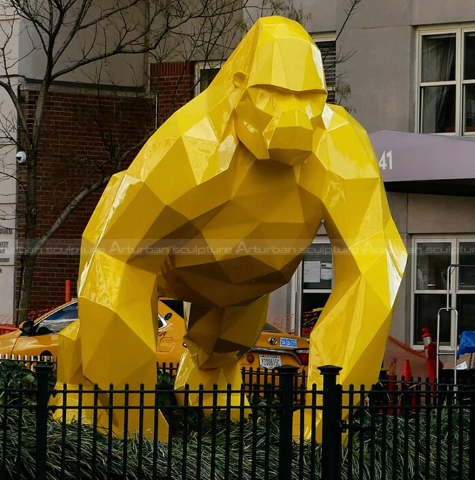
Gorillas are the largest living primates, possessing broad chests, powerful arms, and highly recognizable facial features. Their images frequently appear in documentaries, films, paintings, and sculptures, making them a significant subject in wildlife art.
Gorilla Statue Art not only showcases the animal’s unique physical structure but also reflects humanity’s understanding of power, intelligence, and the natural world. From traditional realistic sculpture to modern geometric art, artists sculpt gorillas in different ways, conveying various themes through posture and expression.
1. Why are the natural characteristics of gorillas suitable for sculptural creation?
Gorillas primarily inhabit the tropical rainforests of central Africa. Two species exist: the western gorilla and the eastern gorilla. They typically walk using their knuckles and possess well-developed upper limb muscles, large hands, and prominent brow ridges.
These physical characteristics provide a distinct foundation for sculptural creation.
For example, sculptors can distinguish gorillas from other primates by highlighting their broad shoulders, wide chests, and long forelimbs. Facial features require attention to prominent brow ridges, a flat, wide nose, and the proportion between the mouth and jaw.
Adult male gorillas may have silver-gray fur on their backs, hence the name “silverback gorilla.” This feature is also frequently seen in realistic animal sculptures.
However, despite their powerful physiques, gorillas’ daily activities are mostly not aggressive, but rather revolve around foraging, resting, and social interaction.
2. From Realism to Abstraction: What are the modes of expression in Gorilla Statue Art?
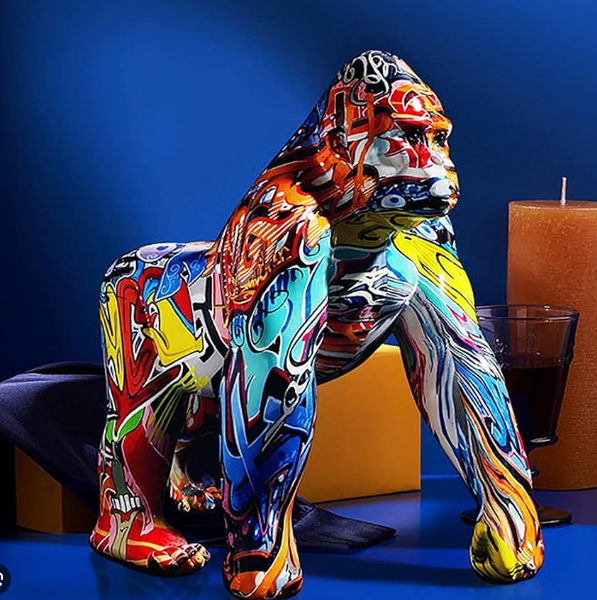
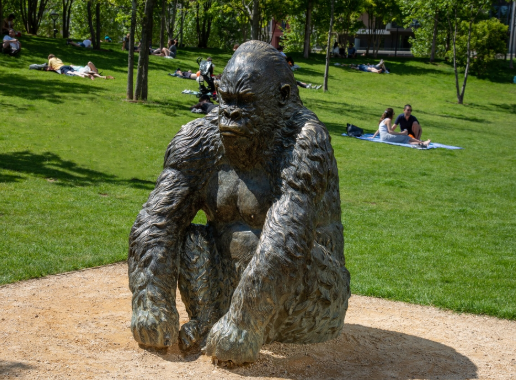
Realistic gorilla sculptures typically emphasize the animal’s true proportions, fur texture, and natural posture. Artists may refer to wildlife photographs, skeletal structures, and behavioral images to create sitting, walking, or four-limbed poses.
These works are often used in natural history museums, animal education exhibits, and wildlife-themed spaces to help viewers observe the physical characteristics of gorillas.
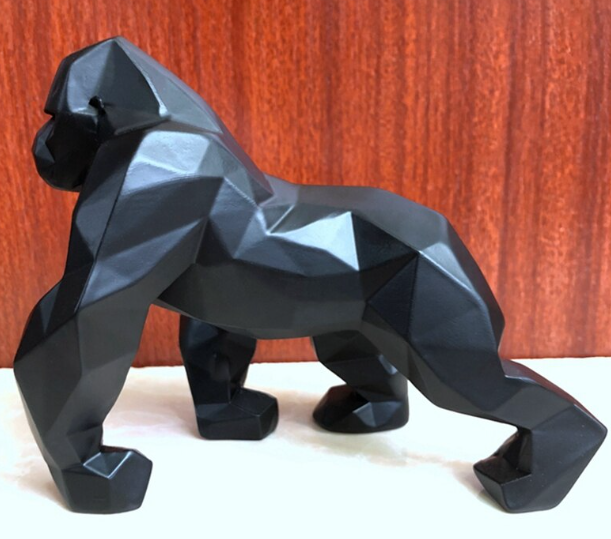
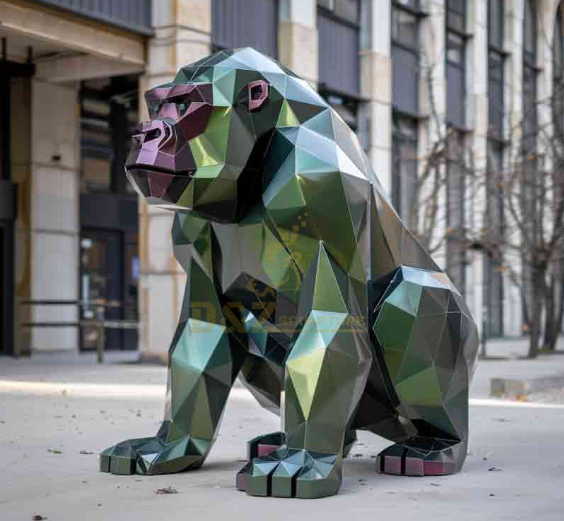
Another common form is modern geometric sculpture. Artists retain the broad shoulders, long arms, and head contours of gorillas, then reorganize the body structure through polygonal facets.
The work of French artist Richard Orlinski is an example. His Wild Kong Oil sculpture combines a geometric gorilla with an oil drum, establishing a visual connection between wildlife and human activity through exaggerated poses and industrial elements.
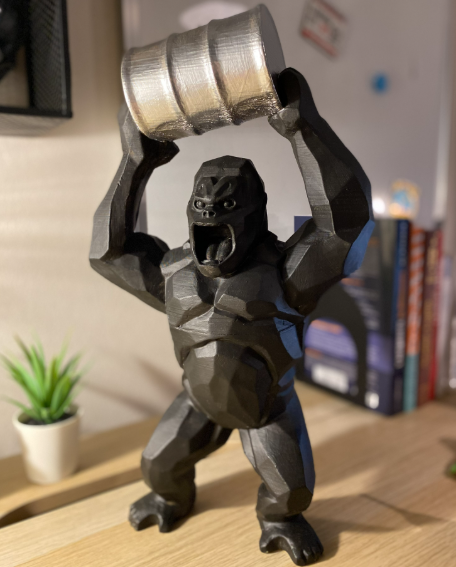
These works do not primarily aim to scientifically recreate the animal’s appearance, but rather use the familiar image of the gorilla to express broader artistic themes.
3. Why are gorillas often used to symbolize power?
The powerful image of gorillas largely stems from their size and muscular structure.
Adult male gorillas are significantly larger than females, with robust forelimbs and a broad body, giving them a strong visual sense of power.
Films and artworks often utilize these features, depicting gorillas roaring, pounding their chests, or raising their arms to emphasize impact.
However, this portrayal is not entirely the same as real gorilla behavior.
In the wild, gorillas have complex social relationships and typically live in family groups. Adult silverback males often play a role in group protection and activity coordination. Chest-pounding, vocalizations, and body displays can also be used to convey information, demonstrate their status, or avoid direct conflict, and do not necessarily indicate an impending attack.
Therefore, when appreciating gorilla sculptures, distinguishing between artistic exaggeration and real animal behavior helps to build a more accurate understanding.
4. How can gorilla sculptures participate in wildlife conservation education?
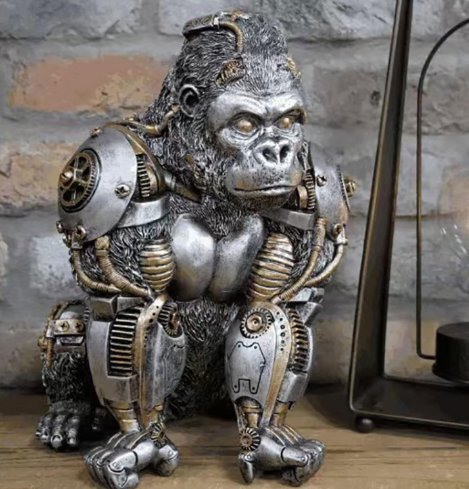
Artworks can attract public attention to animals in a visually appealing way, but their educational value depends on whether they provide accurate information and clear context.
For example, in a natural history museum, a realistic gorilla sculpture can be paired with habitat maps, species information, and behavioral data to help visitors understand the gorilla lifestyle.
In public art, artists may use more symbolic forms to discuss the relationship between deforestation, resource development, and wildlife conservation.
In reality, the main threats facing gorillas include habitat loss, poaching, disease, and environmental pressures from human activities. The conservation status also varies among different species and populations.
Therefore, animal-themed art can not only showcase the powerful physique of gorillas but also remind people to pay attention to the real living environment of these primates.
5. How does Gorilla Statue Art connect animal knowledge with artistic expression?
The charm of gorilla sculptures lies in the fact that the same animal can be presented with completely different characteristics through different art forms.
Realistic sculptures emphasize the animal’s realistic structure and behavior, abstract sculptures focus on form and visual expression, and symbolic sculptures may combine gorillas with other objects to discuss the relationship between humans and nature.
For wildlife enthusiasts, these works offer another way to observe animal forms; for artists, the gorilla’s body proportions, movements, and social behaviors can also become valuable creative material.
Excellent Gorilla Statue Art not only allows viewers to feel the power of gorillas but also inspires people to further understand their ecological habits, social life, and conservation needs.