
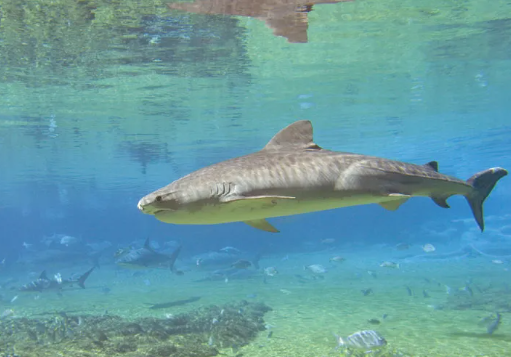
Sharks are fascinating creatures that have captured human imagination for centuries. One of their most interesting traits is their need to keep swimming, a behavior that seems simple yet is crucial for their survival. In this blog post, we’ll delve into the reasons behind this continual motion and what it means for their biology, habitat, and hunting strategies.
1. The Biology of Continuous Movement
Sharks possess a unique anatomical structure that makes continuous swimming a necessity. Unlike many fish, sharks do not have swim bladders, which help other fish maintain buoyancy without expending energy. Instead, sharks rely on their large, oil-filled livers for buoyancy. To prevent sinking, they must keep swimming to generate lift through their pectoral fins and maintain a stable position in the water column.
This need for movement is coupled with their respiratory system. Sharks breathe by swimming with their mouths open, allowing water to flow over their gills. This process, known as buccal pumping, helps them extract oxygen from the water. If they stop swimming, they may not get enough oxygen, which can lead to drowning. Thus, their biological makeup is perfectly evolved for a life spent in perpetual motion.
-
- Learn about the anatomy of sharks and how it influences their swimming habits.
-
- Explore the differences between sharks and other fish regarding buoyancy.
-
- Understand the concept of buccal pumping and its importance.
-
- Consider the evolutionary adaptations that make this behavior vital.
2. Hunting and Feeding Strategies
Continuous swimming also plays a critical role in a shark’s hunting and feeding strategies. Sharks are apex predators, which means they sit at the top of the food chain. Their effectiveness as hunters is partly due to their ability to cover vast distances at considerable speeds. By swimming continuously, they can patrol large areas for food and take advantage of environmental cues that might lead them to their next meal.
Sharks use a combination of acute senses to find prey. They have specialized sensory organs known as the ampullae of Lorenzini, which detect the electrical fields produced by other marine animals. This ability allows them to pinpoint the location of prey, even when hidden. Continuous movement helps them navigate through their environment and align themselves for the perfect strike when they spot their next meal.
-
- Understand the role of sensory organs in a shark’s hunting capabilities.
-
- Learn about the speed at which different shark species can swim.
-
- Explore various hunting techniques used by sharks.
-
- Investigate the ecological impact of sharks as apex predators.
3. Energy Conservation and Migration Patterns
While it may seem counterintuitive, sharks can conserve energy even while continuously swimming. They use a technique called “gliding,” where they swim to gain speed and then let their body glide through the water, using less energy. This method is particularly advantageous during long migrations, where certain shark species travel thousands of miles for breeding or feeding.
Migration patterns in sharks are remarkably sophisticated. For instance, the great white shark migrates between specific feeding grounds and breeding areas. These extensive journeys require them to maintain movement constantly to ensure they are in the right place at the right time. The ability to maintain a steady rhythm while swimming allows them to engage in these long migrations effectively.
-
- Research common migration patterns of different shark species.
-
- Learn about the energy-saving techniques sharks use while swimming.
-
- Understand the ecological significance of migratory behaviors.
-
- Consider how climate change might affect shark migration.
4. Social Behaviors and Group Dynamics
While many people perceive sharks as solitary hunters, some species exhibit fascinating social behaviors. Certain sharks can be seen swimming in groups, especially during migration or when feeding. This collective behavior often offers advantages, such as improved hunting success through cooperative strategies.
In these social groups, sharks may establish hierarchies and engage in exploratory swimming patterns. This behavior may enhance their ability to find food and evade threats. Socially interactive sharks, like hammerheads, demonstrate how swimming together can be advantageous for species survival through shared knowledge and skills in hunting.
-
- Learn more about species of sharks that exhibit sociable behavior.
-
- Explore the advantages of group dynamics and cooperation.
-
- Investigate how social behavior affects hunting success in sharks.
-
- Consider the implications of social structures in shark populations.
In conclusion, sharks keep swimming due to a combination of their biological structure, hunting strategies, energy conservation methods, and complex social behaviors. Understanding these factors not only deepens our appreciation for these magnificent creatures but also emphasizes the importance of conserving their vital ecosystems. Whether you’re a shark enthusiast or just curious about marine life, consider taking the time to learn more or even participate in conservation efforts to protect these incredible animals.