
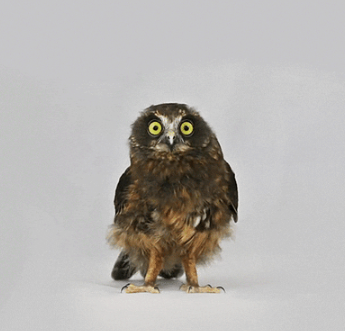
Owls are fascinating creatures known for their unique behaviors and distinctive features. One behavior that captivates many observers is their head-bobbing. This intriguing action is not just a quirky trait; it serves practical purposes that enhance their abilities in the wild. In many wildlife parks, educational gardens, and art displays, an owl statue is also used to symbolize wisdom and quiet observation, reflecting these very behaviors in a still form.
1. The Anatomy of an Owl’s Head Movement
Owls have a remarkable ability to rotate their heads almost completely around. This flexibility stems from their unique skeletal structure. Unlike humans, owls have extra neck vertebrae, enabling them to rotate their necks up to 270 degrees. However, this doesn’t mean they can see perfectly in all directions; they still need to move their heads to gain a better view of their surroundings.
The bobbing often observed is a way for owls to enhance their depth perception. By moving their heads, they can better judge distances to prey, which is crucial when hunting in low-light conditions. This head movement also helps them triangulate sounds, aiding in locating potential food sources in their environment.
- Observe an owl in its natural habitat to see this behavior first-hand.
- Notice the rhythm and speed of their head motions.
- Pay attention to how they use head movements to track sounds and movements.
- Document your observations to better understand their hunting techniques.
2. Communication Through Head Movements
Owls use various types of body language, including head bobbing, to communicate with each other. During mating rituals, an owl may bob its head to convey attraction or dominance. This behavior reinforces social hierarchies and plays a vital role in their breeding practices.
When an owl feels threatened, it might also exhibit specific head movements. By bobbing or nodding its head, it can demonstrate confidence or aggression to potential predators or rivals. This form of non-verbal communication is essential for maintaining safety and territorial boundaries in the often perilous world of wildlife.
An owl statue placed in gardens or nature-themed spaces often represents this quiet intelligence and alert presence, reminding viewers of the owl’s subtle but expressive communication style.
- Learn to recognize different head movements and their meanings.
- Take note of head bobbing during mating seasons to understand social dynamics.
- Observe the nuances in head movements when owls interact with each other.
- Keep a journal of behavioral changes during different times of the year.
3. Hunting Strategies Involving Head Movement
Head bobbing allows owls to utilize their acute hearing while searching for prey. Owls possess asymmetrical ear openings, allowing them to pinpoint the source of sounds in three-dimensional space. By moving their heads, they can determine the exact location of rustling leaves or scurrying rodents hidden beneath the underbrush.
During the hunt, an owl may also bob its head to refine its vision. While their large eyes provide excellent night vision, they lack the ability to move within their sockets. Consequently, head movement becomes vital as it gives them the ability to focus and gauge their target’s distance accurately.
An owl statue in a wildlife or educational setting often represents this precision and patience, capturing the essence of the owl’s hunting intelligence in a symbolic form.
- Try spotting owls at dusk or dawn when they are most active.
- Observe how they interact with their environment while hunting.
- Be quiet and patient to witness their hunting techniques up close.
- Consider understanding their prey choice and habitat preferences.
4. The Role of Environment and Habitat
The environment in which an owl resides can significantly impact its head-bobbing behavior. For instance, in dense forests or woodlands, an owl may require more pronounced head movement to navigate its surroundings and detect movements in the foliage. In open spaces, the bobbing may even be less significant as visibility is broader.
Different species of owls have adapted their head movements based on their specific habitats. Barred owls, for example, demonstrate different bobbing behaviors compared to barn owls. The adaptations are essential for their survival as they optimize their hunting strategies and communication methods depending on their environment.
In parks, museums, or garden displays, an owl statue is often used to represent these adaptations and the owl’s deep connection with its natural habitat.
- Research the specific owl species in your area to learn about their habitat preferences.
- Explore different environments to observe how owls adapt their behaviors.
- Visit local wildlife reserves or parks where owls are known to reside.
- Take note of how environmental changes may impact owl behaviors.
Owls are incredible creatures, and their head-bobbing is just one of the many fascinating aspects of their behavior. Understanding why they do this can enhance our appreciation for these magnificent birds. Observing owls in the wild or through educational exhibits—and even seeing an owl statue that represents them—can help deepen your understanding and encourage the conservation of their habitats.