
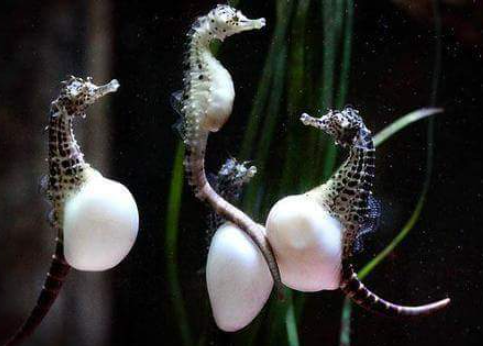
When you think of pregnancy, images of expectant mothers usually come to mind. However, nature has a fascinating twist in the case of seahorses. Male seahorses are the ones that carry and nurture the babies, showcasing a unique role reversal in the animal kingdom. This remarkable phenomenon not only raises questions about parental roles but also highlights the complexity of marine life.
1. The Role of the Male Seahorse
In seahorses, it’s the males that have a special brood pouch, which is a unique feature that sets them apart from most other species. This pouch functions similarly to a womb, allowing males to carry fertilized eggs until they hatch. After the female deposits her eggs into the male’s pouch, he fertilizes them internally. This adaptation provides a protective environment for the developing embryos, optimizing their chances of survival in the unpredictable ocean environment.
Additionally, male seahorses actively participate in nurturing the young. As the babies grow inside the pouch, the male regulates the environment by adjusting salinity levels and providing oxygen to the embryos. This parental investment increases the likelihood that more young seahorses will survive as they emerge into the ocean. Male seahorses truly redefine what it means to be a caregiver in the animal kingdom.
-
- Understand the anatomy: Familiarize yourself with the male seahorse’s brood pouch.
-
- Learn about fertilization: Know how male seahorses fertilize the eggs.
-
- Monitor environmental factors: Recognize the conditions in which seahorses thrive.
-
- Explore their habitat: Investigate the ecosystems where seahorses are commonly found.
2. Evolutionary Benefits of Male Pregnancy
The evolutionary advantage of male pregnancy can be traced back to reproductive strategies that optimize mate selection. By allowing the male to carry the young, females can produce more eggs, knowing their offspring will be safely nurtured. This strategy helps in ensuring the continuation of the species, especially in environments where predation rates are high. Thus, while the female invests energy into creating eggs, the male ensures their protection, creating a balanced reproductive strategy.
Moreover, this role reversal aids in improving genetic diversity. By sharing the responsibility of offspring care, seahorses can mate with multiple partners, promoting a healthier gene pool. Consequently, this unique reproductive behavior not only benefits individual seahorses but also enhances the resilience of the species as a whole.
-
- Investigate mating behaviors: Research how seahorses choose their partners.
-
- Observe territoriality: Understand how males and females interact during mating.
-
- Consider environmental factors: Study how external factors affect reproductive success.
-
- Monitor population health: Keep track of genetic diversity within seahorse populations.
3. Challenges Faced by Male Seahorses
While male seahorses are remarkable caregivers, they face several challenges in their unique role. Firstly, the male’s ability to carry the young places him at a greater risk during predation. While he’s busy protecting the brood, he can become more vulnerable to larger fish and other predators. This responsibility requires a delicate balance between nurturing and self-preservation, which can be quite taxing.
Furthermore, environmental changes pose significant threats to seahorse populations. Habitat destruction, pollution, and climate change affect the availability of suitable breeding grounds. Male seahorses that depend on specific conditions for carrying their young may find it increasingly difficult to fulfill their parental role in a rapidly changing environment. Thus, caring for offspring in the wild is a monumental challenge marked by both biological and ecological factors.
-
- Stay informed: Follow marine conservation efforts that aim to protect seahorse habitats.
-
- Participate in local clean-up: Join initiatives to reduce ocean pollution.
-
- Engage in research: Support studies focused on seahorse biology and ecology.
-
- Educate others: Share information about the challenges faced by seahorses.
In conclusion, male seahorses carry babies as a unique evolutionary strategy that significantly impacts their species’ survival and reproductive success. Understanding this extraordinary role can inspire us to learn more about marine life and the importance of protecting their habitats. For those interested in marine biology or conservation, diving deeper into this topic can yield fascinating insights into the wonders of ocean life.