
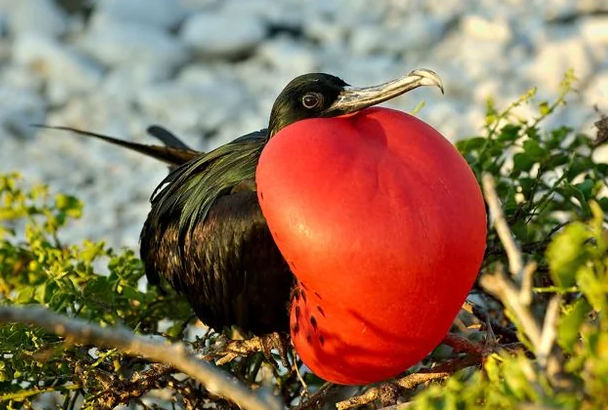
Frigatebirds are remarkable seabirds known for their impressive size, long wingspan, and striking features. One of the most captivating aspects of these birds is their ability to inflate their red throat pouches, a behavior commonly seen during mating season. This blog will explore the reasons behind this fascinating display.
1. The Role of Courtship
The primary reason frigatebirds inflate their red throat pouches is to attract mates. During the breeding season, male frigatebirds inflate their bright red gular sacs to showcase their vitality and genetic fitness. The larger and more vibrant the pouch, the more appealing the male appears to females looking for a mate. This visual display is often accompanied by unique calls and postures that further enhance the male’s attractiveness.
This high-stakes courtship usually involves several males competing for the attention of a female. They will engage in elaborate displays, bobbing their heads and making loud noises to showcase not only their throat pouches but also their overall health and strength. This competition takes place on tree branches or open areas near the nesting sites, creating a vivid spectacle of colored displays and sounds.
-
- Observe males during mating season to see how they inflate their pouches.
-
- Learn about the different calls and behaviors associated with courtship.
-
- Research how physical traits can indicate genetic fitness in wildlife.
-
- Consider participating in bird-watching events to experience these displays live.
2. Communication and Social Signals
Inflating their throat pouches serves not only as a mating display but also as a form of communication among frigatebirds. These birds are incredibly social and rely on visual and auditory signals to convey various messages. When a frigatebird inflates its pouch, it might be signaling dominance or attempting to communicate its intentions within a group, helping establish social hierarchy.
In addition to attracting mates, this behavior can also discourage rival males. A well-inflated pouch sends the message that the bird is healthy and capable, while a less impressive display suggests weakness. By controlling the size and vibrancy of the inflation, frigatebirds can manage their relationships within their colonies, maintaining peace and order while still competing for resources.
-
- Observe the interactions between male and female frigatebirds during the breeding season.
-
- Take note of how often pouch inflation occurs outside of mating displays.
-
- Research social behavior in other bird species for comparative insights.
-
- Engage in discussions with local ornithologists to learn more about frigatebird behavior.
3. Adaptations for Survival
Frigatebirds have evolved specific adaptations that make their throat pouch inflation more than just a courtship display; it’s also a survival tactic. For instance, the vibrant red color of the pouch can signal a bird’s health and vitality, which helps it attract not only mates but also prevent aggressive encounters with potential rivals. The puffed-up appearance can intimidate other birds and signal that the holder is not to be trifled with.
Moreover, the size of the inflated pouch can play a role in thermoregulation. Frigatebirds are known to reside in tropical areas where the sun can be intense. By inflating their pouches, they create a layer of air that may help in cooling their bodies during hot periods, showcasing another layer of functional versatility to this eye-catching display.
-
- Learn about the biology of throat pouches and their functions in different bird species.
-
- Observe the conditions under which frigatebirds inflate their pouches outside mating season.
-
- Identify the environmental challenges frigatebirds face and how adaptations help.
-
- Follow local conservation efforts aimed at protecting frigatebird habitats.
4. Breeding Challenges and Reproductive Success
The flashy display of the inflated throat pouch is not without its challenges. Due to the fierce competition among males, only the healthiest and most dominant individuals succeed in attracting mates. Factors such as food availability, predation, and environmental changes can heavily influence breeding success. During seasons of scarcity, less fortunate males may experience difficulty in inflation, reducing their chances of mating.
Additionally, climate change poses risks to their habitats and food sources, impacting both their reproductive strategies and long-term survival. Conservation efforts are pivotal to ensuring these spectacular displays continue for future generations, highlighting the interconnectedness of environmental health and wildlife population dynamics.
-
- Stay informed about the challenges that frigatebirds face in their natural habitats.
-
- Consider supporting wildlife conservation organizations focused on seabirds.
-
- Monitor local environmental changes that could impact bird populations.
-
- Participate in citizen science projects focused on tracking bird populations.
In conclusion, the colorful, inflated throats of frigatebirds are not just for show; they serve vital roles in communication, adaptation, and survival. By learning more about these remarkable birds, you can contribute to their conservation and deepen your connection with the natural world. Take action by exploring conservation efforts and engaging in birdwatching communities to support these captivating seabirds.