
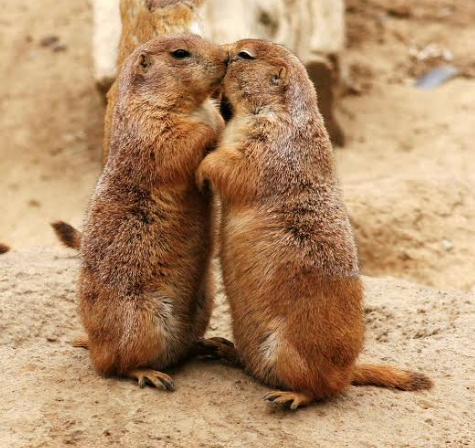
Prairie dogs are fascinating little creatures known for their complex social behaviors and unique communication methods. One of the more endearing and surprising behaviors they exhibit is “kissing.” In this blog post, we’ll explore why prairie dogs kiss, the significance of this behavior, and what it tells us about their intricate social structures.
1. The Social Significance of Kissing
Kissing among prairie dogs is more than just a display of affection; it’s a crucial part of their social interactions. These clever rodents live in intricate colonies called “coteries,” where they establish strong social bonds. Kissing behaviors can help reinforce friendships and maintain group cohesion within the colony. When prairie dogs “kiss,” they’re often engaging in a greeting ritual that helps solidify their social ties, much like how humans use hugs or handshakes.
This form of greeting is also essential for younger prairie dogs. As they grow, they learn social hierarchies and boundaries through kisses. The more established members of the group often initiate these interactions, helping younger individuals understand their place within the colony and teaching them social cues. This communal learning reflects a robust social structure that ultimately supports the survival of the group as a whole.
-
- Observe prairie dog colonies for interactions.
-
- Learn about the different forms of communication they display.
-
- Identify the roles of younger versus older prairie dogs in socialization.
-
- Document any behaviors you see that seem affection-related.
2. Kissing: A Communication Tool
Prairie dogs communicate through a variety of vocalizations, but kissing serves as a non-verbal communication tool that often conveys affection or comfort. This behavior can help ease tensions within the colony, especially during times of stress or after conflicts. For example, if two prairie dogs have squabbled, a quick kiss can act as a peace treaty, allowing them to reconnect and move past their disagreement.
The act of kissing can also demonstrate a level of trust. Prairie dogs who engage in this behavior are often considered members of a high-standing group or family within their colony. Trust is paramount in their survival, as these animals constantly face threats from predators. Thus, these non-verbal affirmations help create a stronger, more resilient community unit.
-
- Observe how prairie dogs react to conflict situations.
-
- Note the frequency of kisses during stressful times.
-
- Identify which prairie dogs rely on each other more for social support.
-
- Share your observations with others who are interested in animal behavior.
3. The Role of Kissing in Reproduction
In addition to social bonds, kissing plays a role in reproductive behavior among prairie dogs. Courtship rituals often include kissing, where males and females engage in playful behaviors to attract one another. This physical affection can indicate mutual interest and readiness for mating. During the breeding season, these affectionate behaviors are heightened, and kissing becomes more frequent as mates solidify their connections.
Furthermore, engaging in these rituals can facilitate successful breeding by fostering a sense of comfort and safety between mates. Prairie dogs are known to be very attentive parents, and strong pair bonds help ensure that both parents are invested in raising their young. This deep emotional connection formed through kissing contributes to the family’s chances of survival in a sometimes hostile environment.
-
- Monitor breeding behaviors in a colony during the mating season.
-
- Document any changes in kissing frequency during this time.
-
- Look for pairs that exhibit strong bonds to see if their offspring thrive.
-
- Explore further research on prairie dog mating rituals.
4. Kissing: The Learning Process
Kissing and grooming behaviors are an essential part of how young prairie dogs learn from their elders. When juvenile prairie dogs engage in kissing, they are not only forming relationships but are also gaining invaluable social skills. The acts of affection and grooming they experience set the foundation for their interactions in adulthood. Learning from their parents or other older prairie dogs through these intimate gestures helps them adapt to the complexities of prairie dog society.
Many researchers believe that these affectionate behaviors contribute to the overall health of the colony. When young prairie dogs feel secure and well-bonded through kissing and grooming, they are more likely to grow into well-adjusted adults, capable of thriving in the wild. Creating a safe space for young prairie dogs to engage in such affectionate exchanges is critical for colony health.
-
- Encourage observation of juvenile behavior in colonies.
-
- Take note of how young ones interact with older prairie dogs.
-
- Share findings with local wildlife groups or educational institutions.
-
- Consider creating educational materials that highlight these behaviors.
In conclusion, the affectionate behavior of kissing in prairie dogs highlights the remarkable complexity of their social structure. Understanding these interactions not only enriches our appreciation for these animals but also emphasizes the importance of social bonds within any community. If you’re interested in learning more about prairie dogs or observing their behaviors, consider visiting a local wildlife center or conducting research online. Your journey into the world of prairie dogs could lead to fascinating discoveries!