
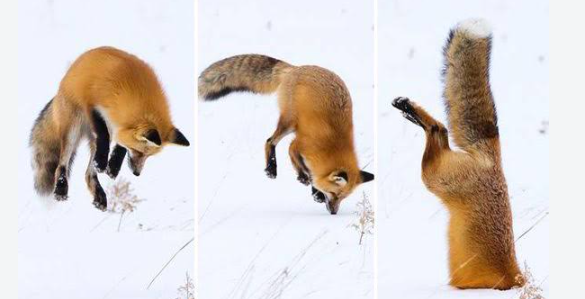
Have you ever witnessed a fox diving headfirst into a snowy landscape? This fascinating behavior isn’t just a whimsical sight; it serves essential purposes in their survival strategy. Let’s delve into the reasons behind this striking feature of fox behavior.
1. Hunting Techniques
One of the primary reasons foxes dive into snow is to hunt for prey hidden beneath the surface. Their keen sense of hearing allows them to detect the faint sounds of movements made by animals such as rodents. By diving into the snow, foxes increase their chances of catching meals like voles or mice that are otherwise inaccessible.
Foxes employ a method called “mousing,” which is particularly evident during winter when the ground is covered in snow. They locate their prey by listening closely and then leaping into the air before diving headfirst into the snow. Studies have shown that this hunting technique can yield a successful catch even when the snow is deep, showcasing their incredible adaptability.
-
- Learn about the types of prey in your area during winter.
-
- Observe foxes during winter months for hunting behaviors.
-
- Consider wildlife tracking to enhance your understanding.
-
- Document your observations to share with friends or local wildlife groups.
2. Thermoregulation and Instinctive Behavior
Another intriguing aspect of foxes diving into snow is their ability to manage body temperature and maintain warmth. The snow acts as an insulator, and burrowing into it can help foxes shield themselves from harsh winds and cold temperatures. By creating a small cave, they preserve heat and find comfort amid freezing conditions.
This behavior also stems from instinctual actions that have evolved over generations. Foxes are naturally solitary animals that utilize their environments to create safe havens for resting or sleeping. When they dive into snow, they secure a temporary shelter that shields them from potential predators while also conserving body heat.
-
- Know the signs of wildlife in snowy conditions, such as tracks or markings.
-
- Be aware of the temperature and adjust your clothing accordingly when outdoors.
-
- Keep an eye on local fauna for clues about how they manage winter environments.
-
- Respect animal habitats and observe from a safe distance.
3. Social Dynamics and Playfulness
In addition to hunting and thermoregulating, foxes also dive into snow as a form of play. They exhibit playful behavior, especially during moments when they are not actively hunting or resting. Snow provides a unique environment for interaction, where foxes can leap, slide, and roll around, promoting their physical agility and social bonding.
Young foxes in particular engage in this playful diving as they explore their surroundings and practice their skills. This behavior plays a crucial role in their development, allowing them to refine hunting techniques, build social interactions, and foster teamwork as they chase each other through snowy landscapes.
-
- Create a wildlife observation journal to note playful behaviors.
-
- Encourage outdoor activities for kids, drawing parallels to animal behavior.
-
- Watch documentaries on foxes to learn more about their social interactions.
-
- Share your findings with nature clubs or online communities.
4. Signs of Health and Adaptability
The behavior exhibited by foxes diving into snow also reflects their health and adaptability. Healthy foxes are agile and energetic, capable of efficiently hunting in challenging conditions. When you see foxes engaging in this behavior, it can be a sign that they are well-adjusted to their habitat and capable of thriving despite environmental challenges.
Additionally, the adaptation to diving and hunting in snow demonstrates the resilience of foxes. They have evolved various traits, such as excellent camouflage in white conditions and the ability to sense food underneath icy surfaces. These adaptations allow them not only to survive but also to thrive in habitats that may seem inhospitable to many other creatures.
-
- Educate yourself about the local ecosystem and its inhabitants.
-
- Engage in community science projects to report wildlife sightings.
-
- Support wildlife conservation efforts to maintain healthy habitats.
-
- Encourage discussions about local fauna among peers to raise awareness.
In conclusion, the spectacular sight of foxes diving headfirst into the snow is much more than just playful behavior; it showcases their hunting techniques, adaptability, and instinctual practices for survival. Next time you spot this delightful creature, you’ll understand the snowy choreography at play that has kept them thriving for countless generations. Whether you’re observing them in the wild or learning about their habits, consider exploring further into the world of wildlife!