
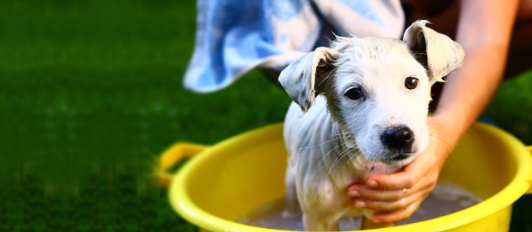
Bathing a rescued stray dog can be an essential part of their rehabilitation and settling into their new home. It’s a chance to clean them up while also fostering a bond between you and your new furry friend. However, it’s important to do this safely and effectively to ensure a positive experience for both of you.
1. Preparing for the Bath
Before you even turn on the water, it’s crucial to gather all necessary supplies. Start with a high-quality dog shampoo that is gentle on the skin. Look for products specifically designed for dogs, as human shampoos can be too harsh. It’s also wise to have towels, a non-slip mat, and a brush ready, especially if your rescue dog has long fur. The brushing will help remove loose hair and reduce tangles before the bathing starts.
Choose an appropriate location for the bath. If your dog is small, a sink may work, while larger breeds can be bathed in a bathtub or even outside with a hose. Ensure the area is safe, warm, and dry; stray dogs can be easily frightened, and a calm environment will help reduce stress. Perhaps consider using a leash or restraint to keep your dog from jumping out of the bath.
-
- Gather all bathing supplies before you start.
-
- Select a gentle dog shampoo.
-
- Prepare a warm, safe bathing area.
-
- Brush your dog before bath time.
-
- Consider using a leash for safety.
2. Bathing Technique
When you’re ready to start bathing, it’s essential to approach your dog with a calm demeanor. First, gently wet their coat using lukewarm water, avoiding their eyes and ears. Slowly introduce the shampoo, applying it in small amounts, and lather it evenly throughout their body. Be patient, and offer plenty of praise to help them feel more comfortable during the process.
Be particularly cautious around sensitive areas such as the face, paws, and tail. You may use a damp cloth to clean the face instead of pouring water directly. After you’ve lathered and scrubbed thoroughly, ensure you rinse them well to avoid any residue that might irritate their skin. This step is crucial as neglected soap can lead to itching or discomfort.
-
- Use lukewarm water for bathing.
-
- Apply shampoo gently and evenly.
-
- Use a damp cloth for sensitive areas.
-
- Rinse thoroughly to eliminate all soap.
-
- Offer praise and treats throughout the process.
3. Post-Bathing Care
Once your dog is clean, the next step is drying. Use a towel to gently pat down their fur, absorbing as much water as possible. If your dog is comfortable, you can also use a low-speed dog dryer. However, some dogs might be frightened by this noise, so always keep their comfort in mind. After drying, brush their coat again to remove any remaining loose hair.
After the bath, keep your dog warm and cozy, especially if you bathed them in a cooler environment. This is also a good time to check for any skin issues or parasites, such as fleas and ticks. Establishing a routine following the bath will help your dog associate the experience with positive outcomes, such as treats or cuddles, making future baths much easier.
-
- Gently pat your dog dry with a towel.
-
- Brush their coat after drying.
-
- Check for skin issues while drying.
-
- Keep them warm after the bath.
-
- Consider regular bathing as part of their routine.
Bathing a rescued stray dog is an important step in your journey together. Always prioritize comfort and safety, keeping in mind your new friend’s unique needs. Creating a positive bathing experience can help build trust and strengthen your bond, so take it slow and have fun.
In conclusion, bathing a rescued stray dog is not only about cleanliness but also about comfort and trust-building. Take your time, and remember to shower them with love and patience throughout the process. Consider seeking advice from a vet or a professional groomer to ensure you’re doing everything right for your new companion.