
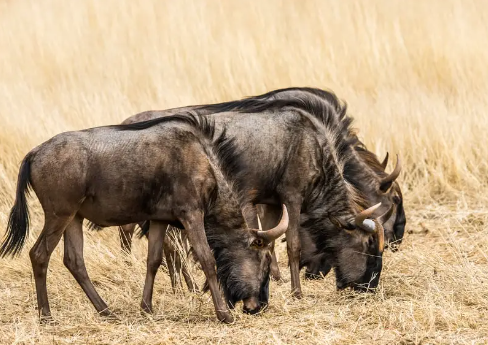
Grazing Giants: Unraveling the Feeding Habits of Wildebeests
Wildebeests, often referred to as gnus, are among the most fascinating animals in the African savanna. Their grazing habits not only play a critical role in their survival but also significantly impact their ecosystems. Understanding how these majestic creatures feed can provide insights into their behavior and the environments they inhabit.
The Importance of Grazing in a Wildebeest’s Life
Wildebeests are herbivores that primarily feed on grasses, making grazing an integral part of their daily routine. Their unique digestive systems are adapted to break down tough grass fibers efficiently, allowing them to thrive in areas where other herbivores might struggle. Wildebeests are particularly fond of short grasses, which are abundant during certain seasons. This preference helps them maintain their strength and energy levels, as they embark on long migrations in search of greener pastures.
Adapting to Seasonal Changes
One of the most interesting aspects of wildebeests’ feeding habits is their adaptability to seasonal changes. During the dry season, when grass becomes scarce, wildebeests can travel vast distances in search of food and water. This migration not only ensures they have access to fresh grazing areas but also helps manage the vegetation in their habitats. In fact, their movement patterns can influence the growth of grasses and even the ecological balance of the savanna. This wandering lifestyle showcases their resilience and the instinctual need to adapt to changing environments.
Social Grazing Behavior and Its Benefits
Wildebeests are highly social animals, often forming large herds that can number in the thousands. This herd behavior significantly affects their feeding habits. Grazing in groups provides safety in numbers, allowing them to stay alert to potential threats from predators. Moreover, social grazing can lead to more efficient foraging. As they graze together, wildebeests can cover larger areas and more effectively locate patches of grass. This collaborative approach not only enhances their chances of survival but also contributes to the dynamics of their environment, influencing which plants thrive.
Conclusion
Wildebeests are truly remarkable grazers that exemplify the complex relationship between animals and their ecosystems. Their feeding habits are not just about survival; they play a vital role in shaping the landscapes they inhabit. To learn more about these grazing giants and their breathtaking migrations, consider exploring documentaries or visiting a wildlife sanctuary. Your understanding of these incredible creatures will deepen your appreciation for the natural world. Maybe you would like to explore some wildebeest artworks.