
Eating Tough: The Musk Ox’s Remarkable Diet and Arctic Adaptations
The musk ox, a remarkable creature of the Arctic, has adapted in extraordinary ways to survive one of the harshest environments on Earth. Understanding its diet and survival strategies provides insight into how life persists in extreme conditions, showcasing nature’s resilience. Let’s explore the musk ox’s unique eating habits and its impressive adaptations.
Diet: What Makes Up a Musk Ox’s Plate
Musk oxen are primarily herbivores, feeding on a variety of tough plant materials. Their diet mainly consists of grasses, sedges, and mosses, which are often found in the tundra environment. During the summer months, they graze on more abundant vegetation, while in winter, they dig through the snow to find food beneath the icy surface. Their specialized digestive systems allow them to extract nutrients from these fibrous plants, which can be hard for other animals to digest. This capability enables musk oxen to thrive even when resources are scarce.
Winter Adaptations: Battling the Cold
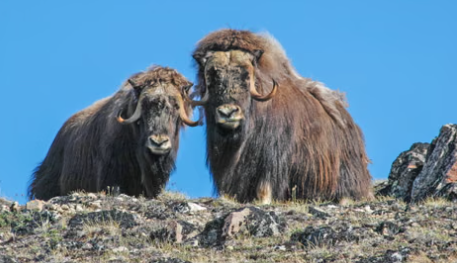
Musk oxen have some impressive adaptations to help them cope with the severe winter cold. Their unique, thick fur, known as qiviut, consists of a double layer of wool that insulates them against freezing temperatures. In addition, these animals have large, robust bodies that help conserve heat during extremely low temperatures. When snow covers the ground, musk oxen utilize their strong hooves to dig through it, exposing hidden vegetation. This combination of physical traits allows them to maintain access to food sources throughout the dark, frigid months of the Arctic winter.
Social Structure: A Team Effort for Survival
Musk oxen also have a fascinating social structure that plays a vital role in their survival. They live in herds typically composed of females and young animals, while males often form separate groups. When facing predators like wolves, the herd unites by forming a defensive circle around the vulnerable members, protecting them from attack. This social behavior not only enhances individual safety but also helps maintain the herd’s cohesion, ensuring that members can locate food and find shelter together amidst the challenges of their environment.
In Conclusion
The musk ox’s ability to adapt and thrive in the harsh Arctic climate offers a stunning example of the resilience found in nature. From their remarkable diet, characterized by tough herbaceous plants, to their unique adaptations for cold survival and strong social behavior, these animals show us how life can flourish even under the most challenging conditions. To learn more about musk oxen and their fascinating world, consider visiting Arctic research centers or wildlife conservation organizations dedicated to their protection. Embrace the beauty of our planet and its remarkable creatures!