
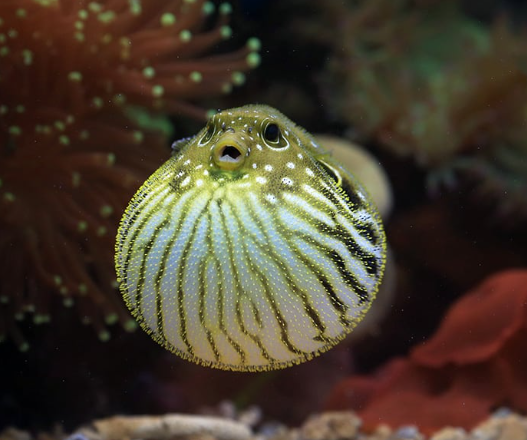
Pufferfish, also known as blowfish, are fascinating creatures known for their unique defense mechanism: inflating their bodies to deter predators. This intriguing behavior not only helps them survive in the wild but also showcases their remarkable adaptability. In this blog post, we will delve into the reasons behind this fascinating phenomenon and its implications in the aquatic ecosystem.
1. Understanding the Inflation Mechanism
Pufferfish have a distinctive ability to inflate their bodies by taking in water (or sometimes air). When threatened, they can expand their bodies up to three times their original size, transforming into a spiky sphere that is much less appealing to potential predators. This inflation is made possible by their elastic stomach, which can stretch significantly without bursting. In addition, their skin is covered with spines that become more pronounced during inflation, adding to their frightening appearance.
The inflation process requires a rapid intake of water, which the pufferfish achieves through its mouth. Surprisingly, they can also deflate their bodies just as quickly by expelling the water when the threat has passed. This unique adaptation showcases the remarkable evolutionary traits of pufferfish and highlights their role as both prey and predator in ocean ecosystems.
-
- Learn how pufferfish manipulate their body structure to survive.
-
- Observe local marine life and note how pufferfish react to threats.
-
- Research different pufferfish species and their unique adaptations.
-
- Consider the role of inflation in the food web of aquatic environments.
2. The Role of Inflation in Defense Against Predators
The primary function of a pufferfish inflating its body serves as a deterrent against various predators. Many animals in the ocean are instinctively averse to consuming prey that appears larger and more formidable, especially one with spines. By enlarging themselves, pufferfish signal to predator fish that they might be difficult to swallow. This tactic not only protects them but also promotes the survival of their species in competitive marine environments.
Furthermore, some species of pufferfish contain a potent toxin known as tetrodotoxin, which is highly dangerous to potential predators. When inflation is combined with this toxic defense, it creates a formidable obstacle for any animal considering the pufferfish as a meal. The combination of physical intimidation and biochemical defense ensures that only the most daring predators would take the risk.
-
- Recognize the importance of body size in predator-prey interactions.
-
- Explore the differences in toxin levels across pufferfish species.
-
- Develop an understanding of predator behaviors in response to pufferfish tactics.
-
- Engage in discussions about marine conservation and predator-prey dynamics.
3. Pufferfish in the Ecosystem
Pufferfish play a vital role in the marine ecosystem, influencing both the populations of prey and predators within their habitat. Their unique survival techniques help maintain balance in fish populations, creating opportunities for other marine life to thrive. The presence of pufferfish can indicate a healthy aquatic environment, as they require specific conditions to survive and reproduce.
Moreover, by controlling species that are dense in numbers, pufferfish support biodiversity in their habitat. Their unique feeding habits, which often include consuming poisonous creatures, make them a significant component of the food chain. Their adaptations consequently serve not just for personal survival but also for the broader health of their ecosystem.
-
- Invest in studying the ecological impact of pufferfish species.
-
- Participate in local conservation efforts to protect marine life.
-
- Promote awareness about the significance of maintaining balanced ecosystems.
-
- Engage in community activities that highlight marine biodiversity.
In conclusion, the fascinating inflation behavior of pufferfish is a testament to the wonders of nature. Understanding this unique adaptation not only deepens our appreciation for marine life but also highlights the importance of supporting ecosystems. Consider exploring more about aquatic species and how to contribute to their conservation for the benefit of future generations.