
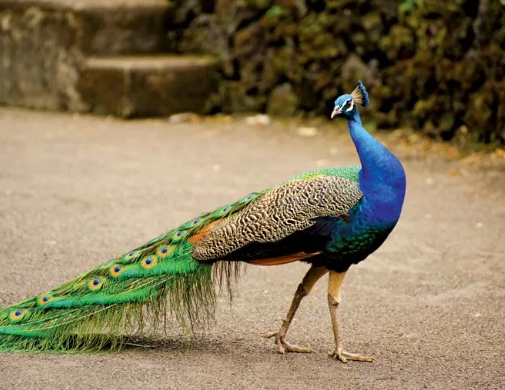
Peacocks are known for their stunningly vibrant tails, which can be mesmerizing to observe. But why do these striking birds spread their tails in the first place? This blog post will delve into the reasons behind this behavior, focusing on courtship, territory, social interactions, and evolution.
1. Courtship Displays
One of the primary reasons peacocks spread their tails is to attract potential mates. During the mating season, male peacocks fan out their magnificent plumage to showcase their appearance and reproductive fitness. This display allows females to assess potential mates based on several visual and behavioral characteristics.
In addition to the size and color of the tail, male peacocks engage in elaborate movements while displaying their feathers. They may turn, shake their feathers, and position themselves in ways that make the colorful eyespots more noticeable. These performances combine visual signals with movement, creating one of the most recognizable courtship displays in the bird world.
Females may evaluate several characteristics when observing displaying males, including feather condition, display quality, and overall physical condition.
- Observe tail size and feather condition when studying courtship behavior.
- Look for balanced and healthy feather patterns.
- Pay attention to the male’s movements during displays.
- Consider the age and overall condition of the bird.
2. Territorial Behavior
Spreading the tail can also occur during competitive interactions. During the breeding season, male peacocks often occupy display areas where they attempt to attract females while remaining aware of nearby males.
Visual displays can help communicate size and presence without immediately requiring physical confrontation. When two males encounter each other, posture, movement, vocalizations, and feather displays may all contribute to the interaction.
The impressive size of the train can make a displaying male appear more visually prominent. In some situations, these signals may help establish distance between competing birds.
Understanding the surrounding context is important when interpreting this behavior because not every open-tail display has the same meaning.
- Identify signs of competitive behavior between males.
- Observe how nearby peacocks respond to a display.
- Watch for changes in posture during encounters.
- Consider seasonal differences in behavior.
3. Social Interactions and Communication
Beyond courtship, body posture and feather position are part of the broader communication system of peafowl. Peacocks communicate through a combination of vocalizations, movements, posture, and visual signals.
A bird’s body position can provide clues about what is happening around it. During courtship, a male typically directs his elaborate train display toward females. During other encounters, changes in posture may reflect alertness, competition, or reactions to nearby animals.
It is therefore useful to observe the whole bird rather than focusing only on its feathers. Vocalizations, walking direction, head position, nearby birds, and environmental changes all provide additional context.
Peafowl behavior is complex, and similar movements can have different meanings depending on the situation.
- Notice displays during both courtship and competitive encounters.
- Observe other body movements alongside feather position.
- Consider the reactions of nearby birds.
- Pay attention to the environment surrounding the interaction.
4. Evolutionary Aspects
The evolution of the peacock’s extraordinary train is closely associated with sexual selection. Charles Darwin used the peacock as one of the classic examples when discussing how preferences during mate choice can contribute to the development of elaborate characteristics.
Unlike ordinary survival adaptations such as camouflage, the peacock’s long and colorful feathers can appear costly to maintain. Producing large feathers requires resources, and an elaborate train may seem inconvenient when moving through vegetation or escaping danger.
However, if certain display characteristics increase reproductive success, they can continue spreading through a population over many generations.
Sexual selection therefore helps explain how visually extravagant features can evolve even when they do not provide an obvious advantage for everyday survival.
The peacock remains an important example for studying questions about mate choice, ornamentation, communication, and the evolution of animal appearance.
- Explore how display traits influence mate choice.
- Study theories related to sexual selection.
- Compare peacock displays with those of other bird species.
- Consider how habitat and reproductive behavior interact with evolution.
Why the Peacock Display Continues to Fascinate People
The dramatic tail display has made the peacock recognizable far beyond the natural world. Its fan-shaped arrangement, repeating eyespots, and distinctive silhouette have appeared in paintings, textiles, architecture, garden ornaments, and decorative objects for centuries.
The same visual characteristics that make a living peacock so noticeable also make the bird a popular subject in decorative art. A Peacock Decor Statue, for example, may emphasize the sweeping shape of the train and the repeated feather patterns that define the bird’s appearance.
This cultural interest reflects how strongly the peacock’s natural display captures human attention.
In conclusion, the breathtaking display of a peacock’s tail is most strongly associated with courtship, while posture and feather displays can also appear during social and competitive interactions. The evolution of this remarkable plumage provides an especially interesting example of sexual selection and animal communication.
Observing peafowl carefully can reveal much more than beautiful feathers. Their movements, calls, interactions, and elaborate displays provide insight into how animals communicate, compete, and reproduce in the natural world.