
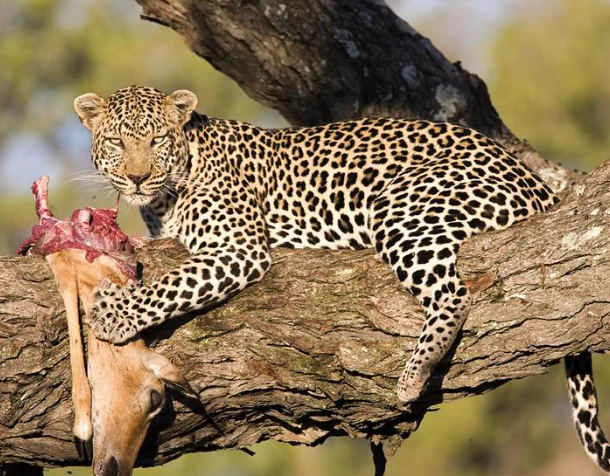
Leopards are remarkable creatures known for their stealth and strength, but one of their most intriguing behaviors is dragging prey into trees. This unique trait is not just a random act; it has evolved for specific survival reasons. Understanding why leopards engage in this behavior can shed light on their adaptation and hunting strategies.
1. Safety from Competitors
One of the primary reasons leopards drag their prey into trees is to protect it from scavengers and rival predators. In the wild, leopards often face competition from other carnivores such as lions and hyenas. By elevating their catch, leopards significantly reduce the risk of losing their meal to these larger predators. They instinctively know that securing their food in a high, inaccessible place ensures they can eat without fear of being interrupted.
This behavior isn’t just instinctual; it has been observed numerous times in various regions where leopards reside. For instance, in areas rich with both lions and leopards, the latter will often climb trees with their prey before feasting. This allows them not only to protect their hard-earned meal but also to enjoy it in peace away from ground-dwelling threats.
-
- Look for elevated spaces in the wild; this could indicate a predator’s meal.
-
- Understand the hierarchy of predators in a particular ecosystem.
-
- Observe leopard behavior if possible; it offers insight into their survival strategies.
-
- Consider the geographical areas where you see trees and understand the predator dynamics.
2. Feasting without Distractions
When leopards hunt, they require a quiet environment to focus on consuming their prey. By dragging their catches into trees, they secure themselves in a location where they can eat without constant disturbances. This isolated setting allows them to enjoy their meal thoroughly, which is crucial for their energy levels after an exerting hunt.
Additionally, eating in a tree helps leopards avoid ground-level threats such as snakes or other animals that might disrupt their feeding process. This focus on eating undistracted is essential for their nourishment, especially after expending energy on chasing down prey. Therefore, the act of taking prey into trees can be seen as a dietary strategy, crucial for their survival.
-
- Find high ground for meals in your life; sometimes, quiet reflection is needed.
-
- Limit distractions during meal times to enhance enjoyment.
-
- Ensure you have a secure and peaceful environment while consuming food.
-
- Observe how environment and distractions affect your own eating habits.
3. Storing for Later
Leopards are intelligent creatures that often think ahead, including how to handle their food supply. By dragging prey into trees, they create a pantry of sorts, where they can store their kills for later consumption. This behavior allows them to return to their meal when they are ready to eat again, which is beneficial when prey is scarce or hunting has not been successful.
This technique is particularly advantageous during dry seasons or droughts when food is less abundant. The ability to stash prey in trees means that leopards can revisit their stored food, ensuring they have access to nourishment even when hunting is not fruitful. Thus, their food management strategy is not just about immediate needs, but also about planning for the future.
-
- Formulate a meal prep strategy to enhance food security.
-
- Consider your dietary storage habits; the idea of planning for future meals can save time.
-
- Evaluate how much food you have on hand—are you prepared for unexpected needs?
-
- Learn about seasonal changes in your local area and how they affect food availability.
4. Sharpening Hunting Skills
Dragging prey into trees also serves as a practice for leopards to hone their hunting skills. This behavior can strengthen their physical abilities, such as climbing and grasping, which are vital when pursuing their next meal. The added challenge of maneuvering a large kill up into a tree can help leopards become more adept at both hunting and evading captures in the wild.
Furthermore, this behavior provides opportunities for younger leopards to learn. Observing older leopards adeptly manage their prey can teach youngsters vital skills they’ll need to survive. This passing of knowledge ensures the next generation is well-equipped to thrive in their environment, which is crucial for the survival of the species.
-
- Engage in physical activities that challenge your skills.
-
- Teach younger family members or peers the importance of skills development.
-
- Assess your current skill set; what areas can you improve upon?
-
- Observe experts in any field to learn and adapt their techniques.
In conclusion, the behavior of leopards dragging prey into trees is a fascinating blend of strategy and instinct, ensuring their survival in a challenging environment. Understanding these behaviors not only provides insight into the life of a leopard but inspires us to think about our own strategies for safety, nourishment, and skill development. Whether you are an animal enthusiast or just curious about nature, consider observing the natural world around you and how these behaviors can translate into your life.