
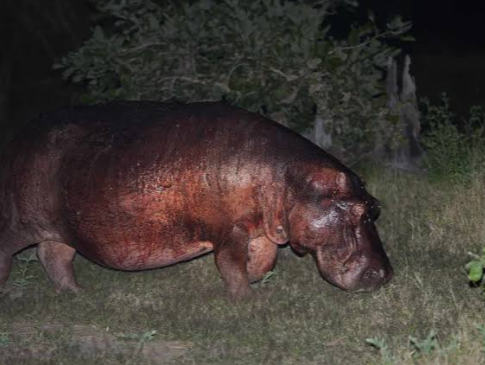
When people think of hippopotamuses, they often envision enormous creatures lounging in water and enjoying the sun. However, a lesser-known fact about these fascinating animals is that they sweat a red liquid. This unique characteristic piques curiosity and prompts a deeper understanding of their biology and lifestyle.
1. The Science Behind Hippo Sweat
Hippos possess specialized sweat glands that secrete a substance often referred to as “blood sweat.” This reddish liquid isn’t actually blood, but rather a combination of two pigments: hipposudoric acid and norhipposudoric acid. These pigments give the liquid its reddish hue and offer essential protective qualities against the harsh sun.
This reddish secretion plays a vital role in safeguarding hippos from UV rays. Instead of relying on traditional sunscreen like humans, hippos have developed this natural adaptation over millions of years, which not only moisturizes their skin but also acts as an antibacterial agent. This adaptation is essential, especially since hippos spend so much time submerged in water, where their skin can easily become vulnerable to infections.
-
- Understand the basic biology of hippos and their environment.
-
- Research other unique adaptations in the animal kingdom.
-
- Learn about the habitat of hippos and the effects of sun exposure.
-
- Explore how these adaptations compare to other mammals.
2. The Importance of Hippo Sweat in Their Ecosystem
The secretion of this red liquid is not just an intriguing physical trait; it also plays a crucial role within the ecosystem. By protecting themselves from ultraviolet radiation and potential infections, hippos can thrive in their natural habitats, which contributes to their population’s stability. Additionally, their activity in water bodies can influence aquatic ecosystems, promoting biodiversity.
Moreover, the liquid serves a purpose beyond mere protection. Hippos often spend time rolling in mud, which helps in cooling down and enhances the efficacy of their sweat by mixing with the mud. This behavior further demonstrates the interconnection between their life cycle and the ecosystems they inhabit, highlighting their vital role in nutrient cycles, particularly in wetland areas.
-
- Observe how hippos interact with their environment.
-
- Learn about the impact of hippos on aquatic ecosystems.
-
- Explore ways to protect the habitats of these magnificent creatures.
-
- Engage in wildlife conservation initiatives.
3. Misconceptions About Hippo Sweat
There are common misunderstandings about hippo sweat that often circulate in popular culture. One prevalent myth is that the red liquid is an indication of a health problem or a sign of aggression. However, this is far from the truth; hippos are simply adapting to their environment in the best way possible. The perceived blood-like appearance can mislead those who are unfamiliar with their biology.
Another misconception is the belief that hippos sweat constantly. In reality, the secretion increases when they are active or stressed, similar to how humans sweat. Understanding these misconceptions helps dispel myths and encourages people to appreciate these incredible animals for their unique traits rather than fear them.
-
- Educate yourself on the biology of hippos to dispel myths.
-
- Share accurate information about hippos with friends and family.
-
- Read reputable articles and books on wildlife to gather knowledge.
-
- Encourage discussions about wildlife conservation based on facts.
In conclusion, hippos sweat red liquid not as a sign of distress, but as a clever adaptation to their environment. Understanding their biology allows us to appreciate these remarkable animals even more. If you’re interested in learning more about hippos or considering wildlife conservation efforts, take the next step to deepen your knowledge!