
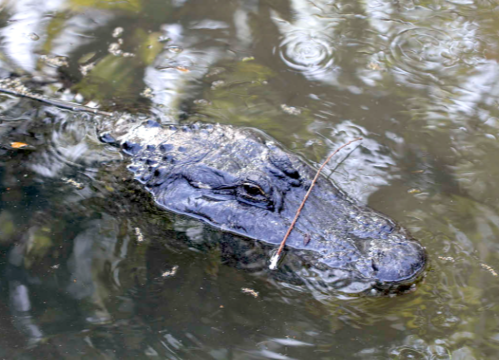
Have you ever spotted an alligator with a stick balanced on its head and wondered why? This fascinating behavior isn’t just a quirky habit; it’s a part of their natural instinct. Let’s dive into the reasons behind this intriguing phenomenon.
1. The Purpose of Stick Balancing
Alligators are known to exhibit a behavior called “stick balancing” primarily to attract prey. By placing sticks on their heads, they mimic the appearance of small insects or branches that fish and birds might find appealing. This deceptive tactic allows alligators to conceal themselves while waiting for unsuspecting prey to come close enough for a quick strike.
Furthermore, these sticks can also help in thermoregulation and camouflage. In sweltering conditions, an alligator may stand still with a stick on its head to create a natural fan effect, cooling their bodies without needing to move. This clever strategy certainly showcases their adaptability as a predator.
-
- Observe alligator behavior in natural habitats where stick balancing is common.
-
- Consider the time of year; stick balancing is more prevalent in warmer months.
-
- Take note of the type of sticks being used; some may attract different species of prey.
-
- Learn about other animal behaviors that involve camouflage for better understanding.
2. The Social Aspect of Stick Balancing
While stick balancing is most often associated with hunting tactics, there is also a social dimension to this behavior. Young alligators, in particular, may engage in stick balancing as a form of play or social interaction among peers. This behavior can help them develop crucial skills they will need when they grow older and are hunting alone.
Interestingly, adult alligators may also engage in this behavior during mating displays. By showcasing their prowess in balancing objects, they can attract potential mates by demonstrating strength and agility, both valuable traits in the wild. This behavior can strengthen bonds between individuals within their social groups.
-
- Observe young alligators for playful interactions that include stick balancing.
-
- Look for stick balancing displays as a form of courtship during mating season.
-
- Research the social structures within alligator populations to gather more insights.
-
- Take photographs or videos of stick balancing behaviors for future study.
3. The Ecological Impact of Stick Balancing
The stick balancing behavior also plays an interesting role in the ecosystem. When alligators use sticks to catch fish and birds, they inadvertently help regulate these populations, maintaining a balance in their aquatic environment. This behavior demonstrates their significance as apex predators and how they contribute to biodiversity.
On a broader scale, the sticks that alligators balance can fall into the water and decompose, thereby providing nutrients to their habitat. This process supports various other wildlife, from microorganisms to larger mammals. The ripples of this seemingly simple action reach far beyond the initial prey capture.
-
- Consider the ecological relationships in the habitats where alligators reside.
-
- Study how stick balancing impacts fish and bird populations in specific areas.
-
- Engage in local conservation efforts to maintain alligator habitats.
-
- Explore how apex predators like alligators play a role in their ecosystems.
In summary, alligators balance sticks on their heads for various reasons, including predatory tactics, social interactions, and ecological benefits. The next time you see an alligator in action, remember the important role this unique behavior plays in their lives and the environment. To deepen your understanding of wildlife behaviors, consider exploring local wildlife reserves or engaging with experts in the field.