
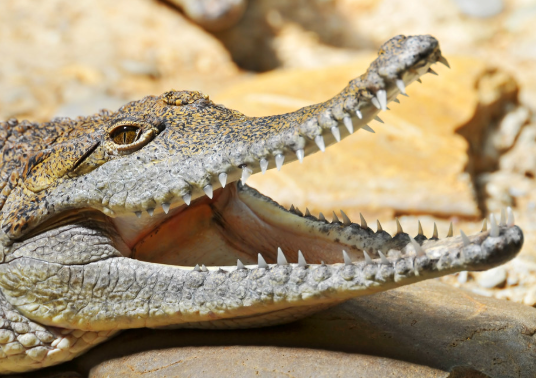
Crocodiles are often seen lounging by the water’s edge with their mouths wide open, a sight that raises many questions. Why do these ancient reptiles do this? The reasons are both fascinating and practical, providing insight into their unique biology and behavior.
1. Temperature Regulation
One of the primary reasons crocodiles keep their mouths open is to help regulate their body temperature. Crocodiles are ectothermic, meaning they rely on external temperatures to maintain their bodily functions. By opening their mouths, they expose the moist surfaces inside to the air, allowing for evaporative cooling, which helps them cool off on hot days.
This behavior is particularly noticeable when temperatures soar, as it can lead to a significant drop in their core temperature. Interestingly, crocodiles usually engage in this practice when basking under the sun, which further highlights the relationship between their environment and physiological needs.
-
- Monitor outdoor temperatures if you have pet reptiles.
-
- Create shaded areas for reptiles to retreat from the sun.
-
- Ensure a water source is available for hydration and cooling.
-
- Watch for signs of overheating, such as lethargy.
2. Signaling Behavior
Keeping their mouths open can also serve as a form of communication among crocodiles. This behavior is often associated with territory and dominance displays. When a crocodile opens its mouth wide, it may be warning others to stay away from its space or assert its presence to other crocodiles. This is especially important during mating season when competition heats up!
In addition to signaling to their kind, this behavior can also be a deterrent to potential predators or rival crocodiles. The sight of a large, open mouth filled with formidable teeth can be quite intimidating. By maintaining this display, crocodiles can maintain their territory without engaging in potentially harmful physical confrontations.
-
- Observe how wildlife interacts during mating seasons.
-
- Learn about body language in reptiles.
-
- Respect the space of wildlife to avoid stressing them.
-
- Contribute to wildlife conservation efforts to protect habitats.
3. Feeding Behavior
Crocodiles may keep their mouths open while waiting for prey, using this tactic as part of their hunting strategy. When they spot potential food, such as fish or small mammals, they can snap their jaws shut with incredible speed and power, making the wide-open mouth a crucial part of their ambush technique. This behavior is often seen when they are partially submerged in water, waiting for unsuspecting animals to approach.
Interestingly, crocodiles are known to be opportunistic feeders. They might keep their mouths open to lure in curious fish that stray too close. Once within reach, the quick snap of the jaws can lead to a meal, illustrating the efficiency of their hunting method.
-
- Understand the local wildlife and its feeding patterns.
-
- Keep a safe distance if you encounter crocodiles in the wild.
-
- Recognize the signs that a crocodile might be hunting.
-
- Engage in responsible wildlife viewing to avoid disturbances.
Crocodiles are remarkable creatures, demonstrating fascinating behaviors crucial to their survival. Observing their habits can deepen our appreciation for these ancient reptiles while reminding us of the importance of respecting their habitats.
4. Cooling Off in the Water
Another reason crocodiles open their mouths is related to their natural behavior while around water bodies. When submerged, crocodiles often keep their mouths ajar, allowing for a flow of water. This action can help them regulate their internal temperature even more effectively than basking in the sun.
Moreover, when fully submerged, a crocodile can instinctively open its mouth to allow swallowing of oxygen while keeping its nostrils closed. This adaptation is essential for remaining underwater for extended periods, making it easier to hunt or evade potential threats.
-
- Learn about the natural habitats of crocodiles if you’re studying them.
-
- Avoid disturbing areas where crocodiles are known to gather.
-
- Understand the importance of water quality in the habitats of reptiles.
-
- Participate in educational programs to learn about crocodile behavior.
5. Social Dynamics
Lastly, keeping their mouths open can play a role in the complex social dynamics of crocodiles. Within a group, visible displays, including an open mouth, can help establish hierarchy among individuals. By revealing their teeth, larger or more dominant individuals signal their strength to others, reducing the likelihood of confrontations.
In groups, younger or weaker crocodiles may observe the behavior of more dominant ones, learning key social cues that help them navigate interactions. This behavior is a vital part of their learning process and contributes to the overall structure of crocodile society.
-
- Research social structures within reptile species.
-
- Observe crocodile behavior with a focus on social interactions.
-
- Document and share your observations to aid in conservation efforts.
-
- Promote awareness about the intelligence of reptiles.
The behavior of crocodiles, particularly keeping their mouths open, is an interesting blend of practicality and social dynamics. Understanding these behaviors not only enhances our knowledge but also helps raise awareness about the importance of preserving their environments. If you encounter a crocodile in the wild, remember to respect their space and observe them from a distance.