
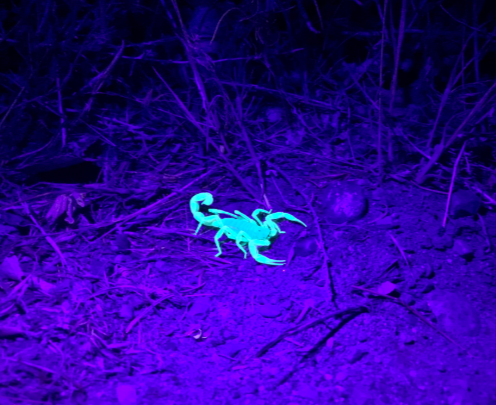
Scorpions are fascinating creatures that have intrigued scientists and nature lovers alike for centuries. One of their most captivating traits is their ability to glow under ultraviolet (UV) light, a phenomenon that raises many questions about its purpose and benefits.
1. The Science Behind Scorpion Fluorescence
The glowing effect observed in scorpions is primarily due to the presence of certain substances in their exoskeletons, which fluoresce when exposed to UV light. This glow is not a result of bioluminescence, like that seen in fireflies or some deep-sea creatures, but rather a reaction to UV rays. The specialized proteins and lipids in scorpion cuticles are believed to convert UV light into visible greenish-blue light.
Researchers propose several hypotheses as to why scorpions developed this unique trait. One prominent theory suggests that glowing may help scorpions locate each other during mating. Another possibility is that the fluorescence serves as a protective measure against predators, mimicking other poisonous organisms or confusing them during attacks. Ultimately, the exact reason remains a topic of ongoing research.
-
- Learn about the structural components making up scorpion exoskeletons.
-
- Research traditional beliefs surrounding scorpion behavior and their visibility at night.
-
- Watch educational videos that illustrate how fluorescence occurs in nature.
-
- Consider the environmental implications of scorpion habitats and preservation.
2. Practical Applications of Scorpion Fluorescence
The study of scorpion fluorescence has important implications for various fields, including medicine and environmental science. For instance, researchers are investigating the biochemical properties of the fluorescent compounds in scorpions to discern their potential applications in drug development. These fluorescent markers can help in imaging techniques, aiding in the study of cancerous cells under UV light.
Moreover, the unique glow can be utilized in field studies to monitor scorpion populations and behaviors. By using UV light, ecologists can easily track scorpion activity at night and gather data without causing disruption to their natural environment. This method allows for more thorough ecological study, which is vital for understanding scorpion populations and their roles in ecosystems.
-
- Explore the correlation between scorpions’ glowing characteristic and various scientific research.
-
- Identify ways fluorescence can assist in tracking and studying wildlife.
-
- Stay updated with current research focusing on scorpion physiology.
-
- Network with scientists working in the fields of biochemistry or ecology.
3. Safety and Scorpions: Understanding Risks
While scorpions are often depicted as fearsome creatures, many species pose no significant threat to humans. However, some can deliver a painful sting, and in rare cases, their venom can be life-threatening. Understanding which species glow can help enthusiasts and researchers gauge the potential risks when encountering these fascinating animals.
It is particularly important to note that not all fluorescent scorpions are dangerous. While some species are known for their potent venom, others are relatively harmless. Therefore, educating oneself about local scorpion populations can significantly enhance safety while engaging in nocturnal explorations.
-
- Learn to identify local scorpion species and their venom potency.
-
- Keep a safe distance from scorpions in the wild.
-
- Use gloves when handling scorpion specimens for research.
-
- Inform others in your community about local scorpion dangers.
In conclusion, the phenomenon of scorpions glowing under UV light is a remarkable aspect of their biology with various implications. Exploring this topic richly enhances our understanding of both scorpions and nature itself. If you’re intrigued by these creatures, consider delving deeper into scorpion ecology or even participating in local conservation efforts. Your journey into the glowing world of scorpions is just beginning!