
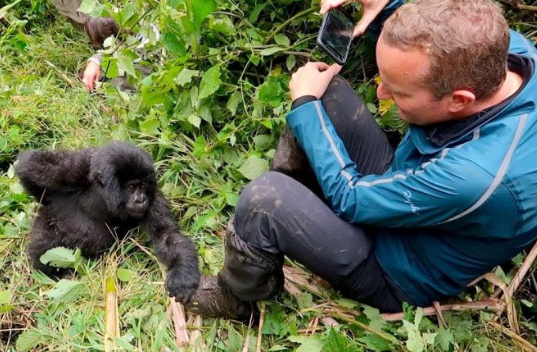
Understanding how gorillas react to humans in the wild is crucial for conservation efforts and ensures safe interactions between humans and these magnificent creatures. As our understanding of their behavior improves, we can better respect their habitats and foster a sense of coexistence. Let’s explore this fascinating topic in more detail.
Gorilla Body Language: Signs to Watch For
Gorillas communicate primarily through body language, and recognizing their signals can inform how we approach them in the wild. For instance, a relaxed gorilla might sit with its arms and legs splayed, indicating comfort and ease. Conversely, if a gorilla puffs up its chest and beats its chest, it may be feeling threatened or defensive. Understanding these cues is vital for humans who venture into gorilla habitats to avoid escalating tensions and ensure both human and animal safety.
Human Encounters: The Role of Familiarity
Gorillas often display different reactions based on their previous experiences with humans. In areas where gorillas have minimal contact with humans, they might exhibit curiosity or caution but are generally more likely to retreat. However, gorillas that have encountered humans regularly may become more familiar and tolerable, exhibiting less fear. This dynamic underlines the importance of responsible tourism and conservation practices to minimize human impact on gorilla behavior and habitat.
Conservation and Human Interaction
By studying gorillas’ reactions to humans, conservationists can develop strategies to protect these gentle giants while promoting eco-tourism. Positive interactions can encourage local communities to value their proximity to gorillas, leading to better protection of their habitats. Programs that educate tourists on how to interact respectfully with gorillas not only enhance the experience but also contribute to the ongoing preservation of these remarkable animals.
In conclusion, understanding how gorillas react to humans is not just about adventure; it’s crucial for their conservation and our harmonious coexistence. If you’re interested in learning more, consider visiting a responsible wildlife sanctuary or supporting conservation initiatives that prioritize gorilla welfare. Every step we take can make a significant difference!