
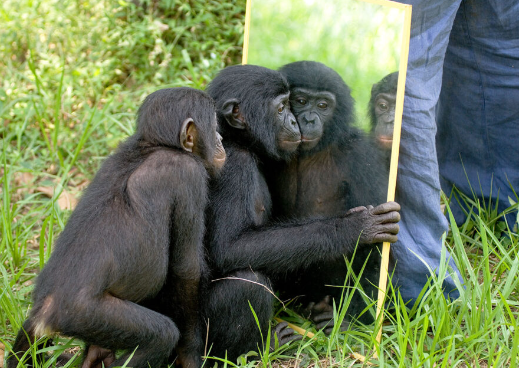
Can Gorillas Recognize Themselves in Mirrors?
Understanding self-recognition in animals has long fascinated scientists, and gorillas are among the most intriguing subjects of this study. Self-recognition relates to consciousness and intelligence, and investigating this ability in gorillas can shed light on their cognitive capacities and social behaviors.
The Mirror Test: A Window into Self-Recognition
The mirror test, developed by psychologist Gordon Gallup Jr. in the 1970s, is a classic method for evaluating an animal’s ability to recognize itself. In this test, a mark is placed on the animal in a location it cannot see without a mirror. If the animal investigates and attempts to remove the mark upon seeing its reflection, it suggests self-recognition. While great apes like chimpanzees and orangutans have shown this ability, studies on gorillas present mixed results. Some gorillas appear to demonstrate self-recognition, while others do not engage with their reflections in the same way, raising questions about their individual cognitive differences.
Social Dynamics and Self-Awareness
Gorillas are inherently social animals, living in complex family structures and exhibiting behaviors that rely heavily on social cues. The ability to recognize oneself in a mirror could significantly enhance social interactions and bonding within their groups. Self-awareness may allow gorillas to navigate their relationships more effectively, understand hierarchies, and communicate more efficiently. Observing gorillas in naturalistic settings reveals that they may use other forms of self-recognition, like scent or social interactions, rather than mirrors, further diversifying our understanding of how they perceive themselves.
Implications for Conservation and Research
Studying gorillas’ self-recognition not only offers insights into their mental capabilities but also plays a critical role in conservation efforts. Understanding their cognitive abilities can influence how we approach gorilla habitats, enrichment programs in captivity, and strategies for reintroduction into the wild. Moreover, as we develop more empathetic methods for studying these magnificent creatures, we can promote greater awareness about their plight and foster a society that values their conservation.
In conclusion, the question of whether gorillas recognize themselves in mirrors is more than a simple experiment; it opens doors to understanding their complex emotional and social landscapes. By exploring animal cognition, we can appreciate the richness of gorilla lives and the urgent need to protect their habitats. Join us in learning more about these incredible beings and the vital research around them.